
Dont Make Me Think, Revisited
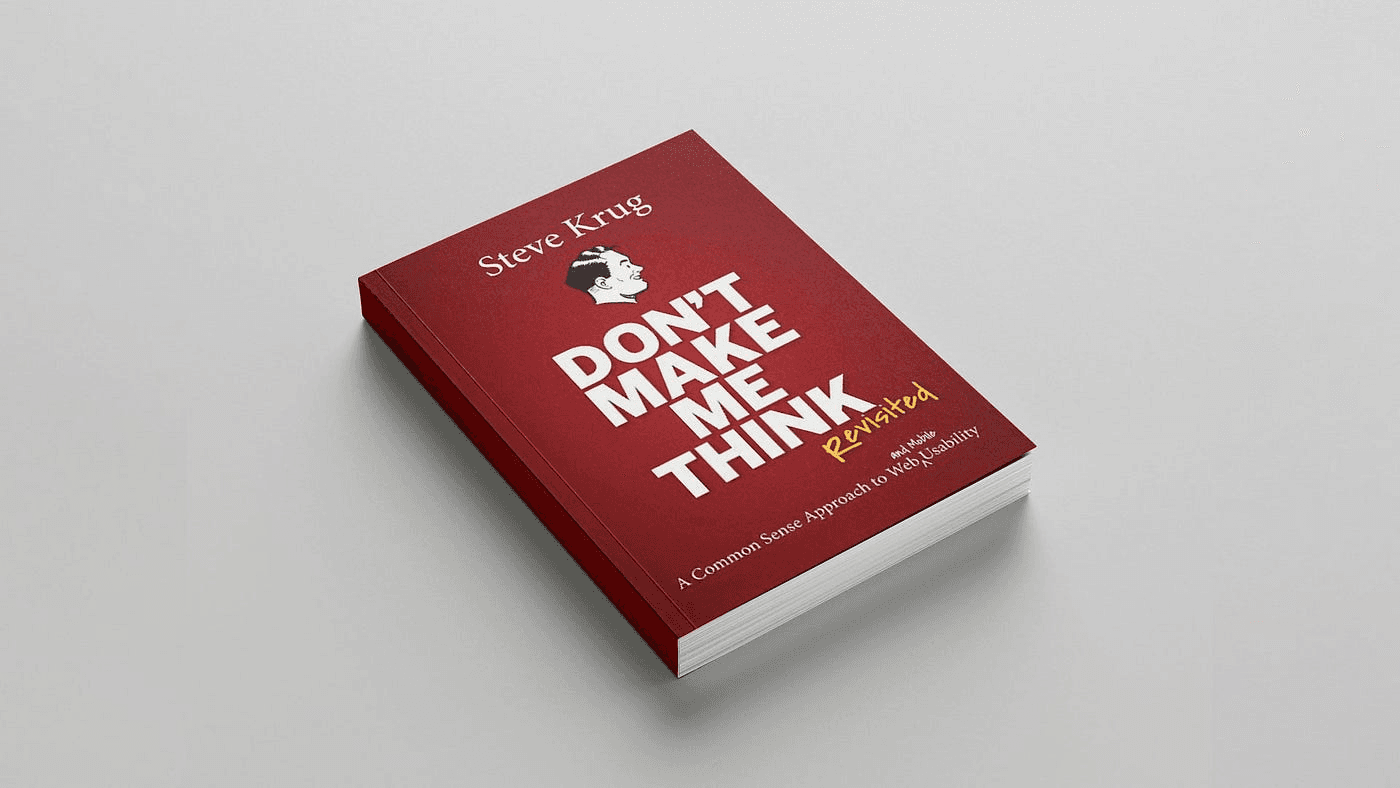
This book is often called the "Usability Bible" for a good reason. Steve Krug successfully proves that great design isn't always about complex visuals or advanced features, but about how easily a user can achieve their goals without feeling frustrated.
Dont Make Me Think, Revisited
This book is often called the "Usability Bible" for a good reason. Steve Krug successfully proves that great design isn't always about complex visuals or advanced features, but about how easily a user can achieve their goals without feeling frustrated.


The "Common Sense" Rule
The main principle I’ve held onto since reading this book is the rule of common sense: a user should not have to spend a single millisecond thinking about how to use the interface we create. Krug emphasizes that every element in a design should be self-explanatory. If we have to explain how a button or navigation works, it means our design has already failed at the most fundamental stage.
The "Common Sense" Rule
The main principle I’ve held onto since reading this book is the rule of common sense: a user should not have to spend a single millisecond thinking about how to use the interface we create. Krug emphasizes that every element in a design should be self-explanatory. If we have to explain how a button or navigation works, it means our design has already failed at the most fundamental stage.
Scanning vs Reading
One of the insights that most changed my workflow in Figma is the fact that users don't read web pages; they scan them. We often get caught up in creating dense content and long paragraphs, when in reality, a user's eyes are only looking for keywords or prominent visual cues. Through this perspective, I learned to be bolder in cutting unnecessary text and strengthening the visual hierarchy so the main message gets across instantly.
Scanning vs Reading
One of the insights that most changed my workflow in Figma is the fact that users don't read web pages; they scan them. We often get caught up in creating dense content and long paragraphs, when in reality, a user's eyes are only looking for keywords or prominent visual cues. Through this perspective, I learned to be bolder in cutting unnecessary text and strengthening the visual hierarchy so the main message gets across instantly.
Usability Testing 101
Reading this section truly opened my eyes to the fact that testing doesn't have to be a budget heavy or overly complicated process. I used to think we needed a lab and dozens of participants, but Krug explains that the most critical flaws are often visible to almost anyone. It taught me that my assumptions as a designer are often biased, and watching a real person interact with my work is the only "truth" in design.
Here are the key shifts in my perspective regarding testing:
The Rule of Three to Five: Testing with just 3 or 5 people is enough to uncover nearly 80% of the major usability issues in any given flow.
Early and Often: It is far better to test one user early in the project than fifty users at the very end when changes are expensive to implement.
Designer Bias: We are too close to our own work to see the obvious; a fresh pair of eyes is the only way to validate if an interface is truly intuitive.
Silent Observation: The goal isn't to lead the user, but to watch them "muddle through" without any help, which reveals exactly where the friction lies.
Focus on Fixes: Testing isn't about proving you’re right; it’s about finding what’s wrong and having the humility to fix the big problems first.
Usability Testing 101
Reading this section truly opened my eyes to the fact that testing doesn't have to be a budget heavy or overly complicated process. I used to think we needed a lab and dozens of participants, but Krug explains that the most critical flaws are often visible to almost anyone. It taught me that my assumptions as a designer are often biased, and watching a real person interact with my work is the only "truth" in design.
Here are the key shifts in my perspective regarding testing:
The Rule of Three to Five: Testing with just 3 or 5 people is enough to uncover nearly 80% of the major usability issues in any given flow.
Early and Often: It is far better to test one user early in the project than fifty users at the very end when changes are expensive to implement.
Designer Bias: We are too close to our own work to see the obvious; a fresh pair of eyes is the only way to validate if an interface is truly intuitive.
Silent Observation: The goal isn't to lead the user, but to watch them "muddle through" without any help, which reveals exactly where the friction lies.
Focus on Fixes: Testing isn't about proving you’re right; it’s about finding what’s wrong and having the humility to fix the big problems first.
My Personal Key Takeaways
The biggest lesson I learned is about simplicity and "satisficing." Users aren't looking for the absolute best or most aesthetic solution; they’re just looking for something "good enough" to complete their task quickly. From this, I began to focus more on functionality and ease of access rather than just chasing design trends that look cool but sacrifice user comfort.
My Personal Key Takeaways
The biggest lesson I learned is about simplicity and "satisficing." Users aren't looking for the absolute best or most aesthetic solution; they’re just looking for something "good enough" to complete their task quickly. From this, I began to focus more on functionality and ease of access rather than just chasing design trends that look cool but sacrifice user comfort.
Final Rating
Even though this book was first published years ago, this Revisited edition remains the gold standard and is highly relevant even for UI/UX trends in 2026. I give this book the highest rating for its ability to simplify complex design concepts into something incredibly practical. It’s a solid thinking foundation for anyone serious about a career in digital products.
Final Rating
Even though this book was first published years ago, this Revisited edition remains the gold standard and is highly relevant even for UI/UX trends in 2026. I give this book the highest rating for its ability to simplify complex design concepts into something incredibly practical. It’s a solid thinking foundation for anyone serious about a career in digital products.
Pages Included
Quick Intro
The "Common Sense" Rule
Scanning vs Reading
Usability Testing 101
My Personal Key Takeaways
Final Rating
Book Description
Release
Sep 25, 2024
Author
Steve Krug
Pages Included
Quick Intro
The "Common Sense" Rule
Scanning vs Reading
Usability Testing 101
My Personal Key Takeaways
Final Rating
Book Description
Release
Sep 25, 2024
Author
Steve Krug


